
CONSTRUCTED REALITIES
Private and Public – Mirrors and Windows
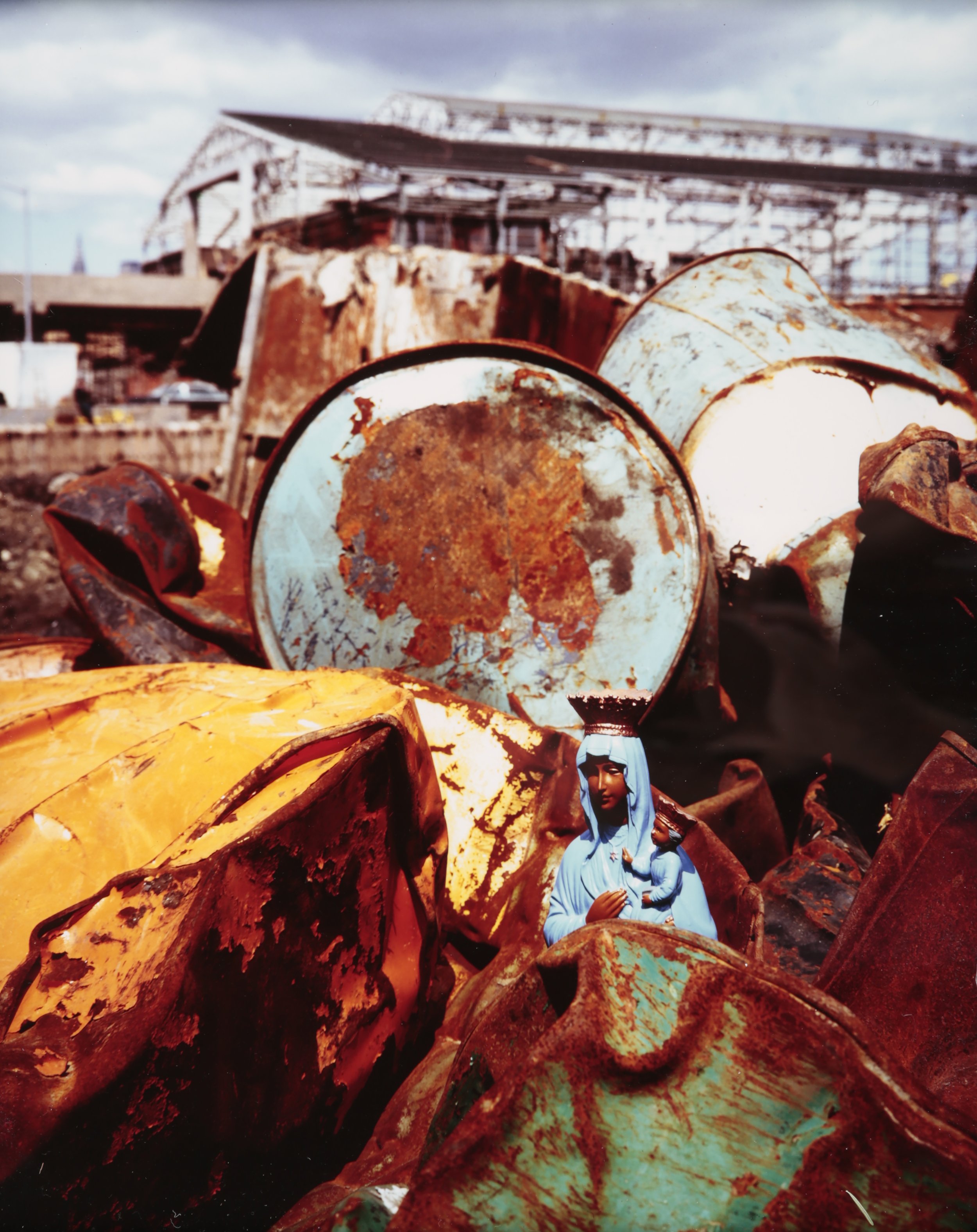
Wanting to pick up a camera again, I returned to my 4”x5” Sinar view camera, this time using it to photograph the still-life objects I constructed from discarded junk. The objects were gathered from the street and landfills of my industrial New York neighborhoods of Williamsburg and Greenpoint.
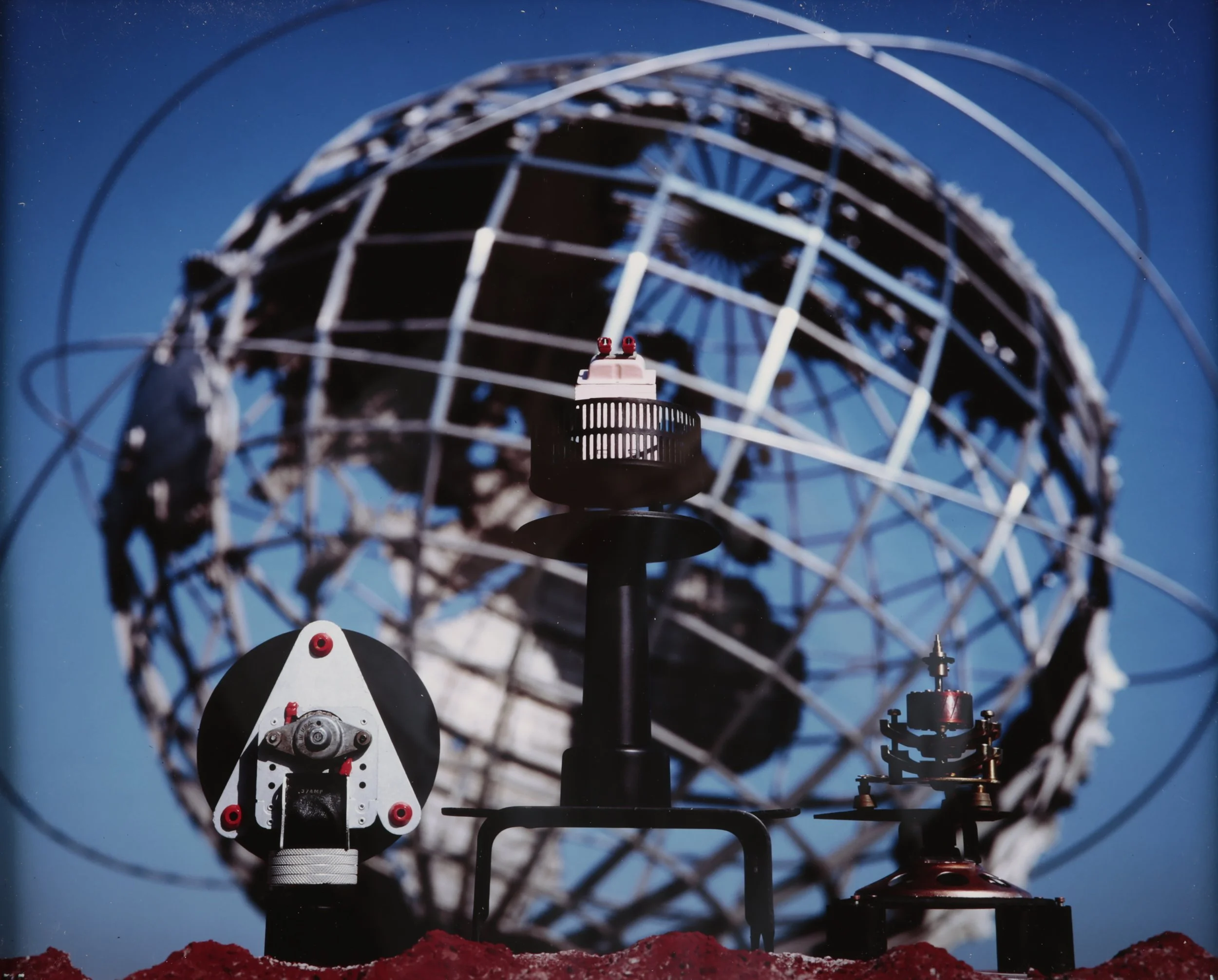
World’s Fair, Queens, NY
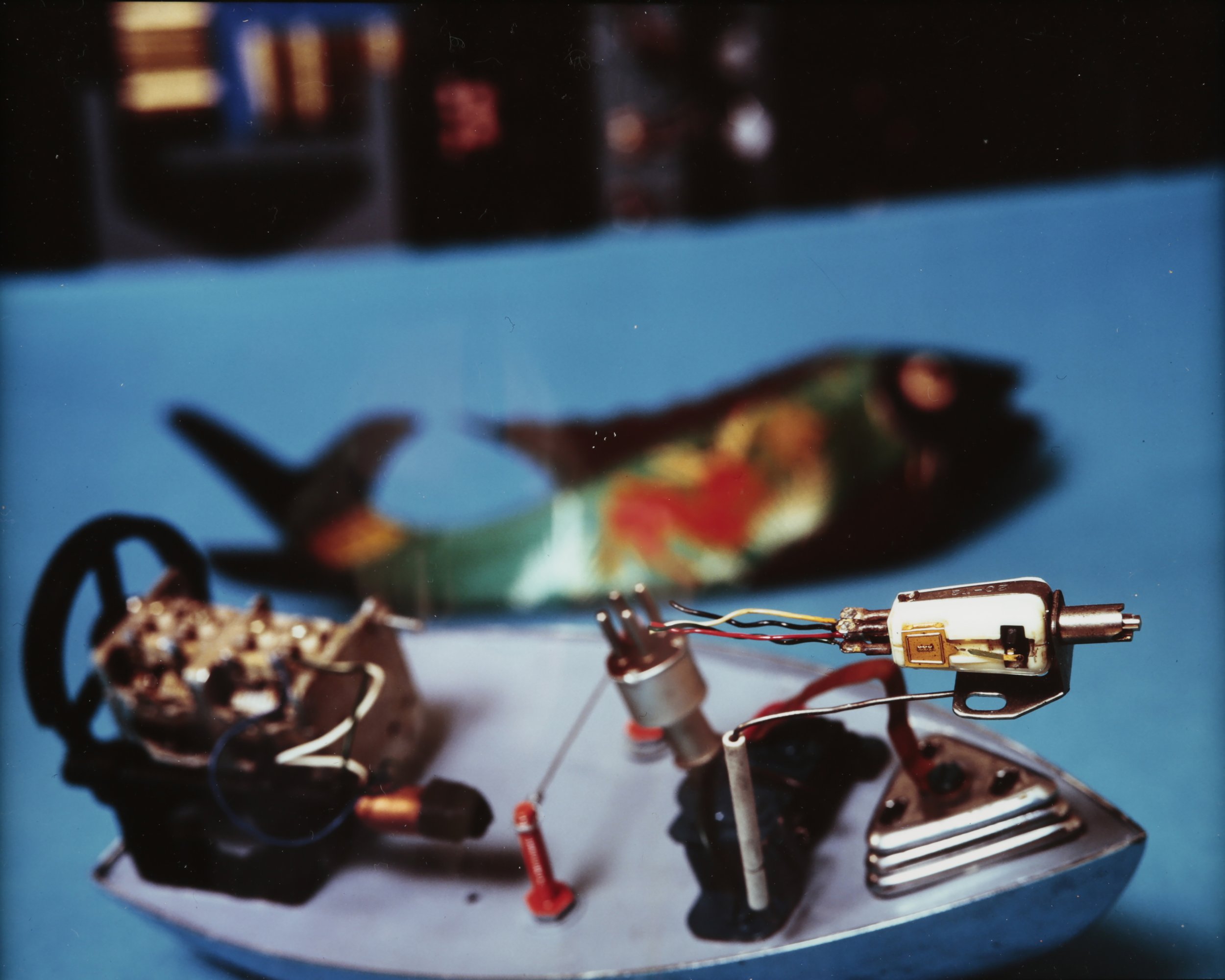
Fish and Boat
Post-Industrialization, Brooklyn, NY
Once the objects were manipulated and finished, I returned to the industrial and urban surroundings to photograph the objects in front of “real” backgrounds, using 4”x5” color transparency film. The luscious materials with the inherent colors, saturation, contrast and detail of both the enlarged Cibachrome prints and illuminated Duratrans further seduced me to use these media. I had explored the Cibachrome medium very early in the 1970s while at Columbia College, and continued through my graduate studies at Cranbrook Academy of Art. Although I never had these photographers in mind while creating, I must credit the likes of Cindy Sherman, Joseph Cornell, Ruth Thorne-Thomson for their still-life centric aesthetics; in a sense granting me permission to play with still-life en plein air.
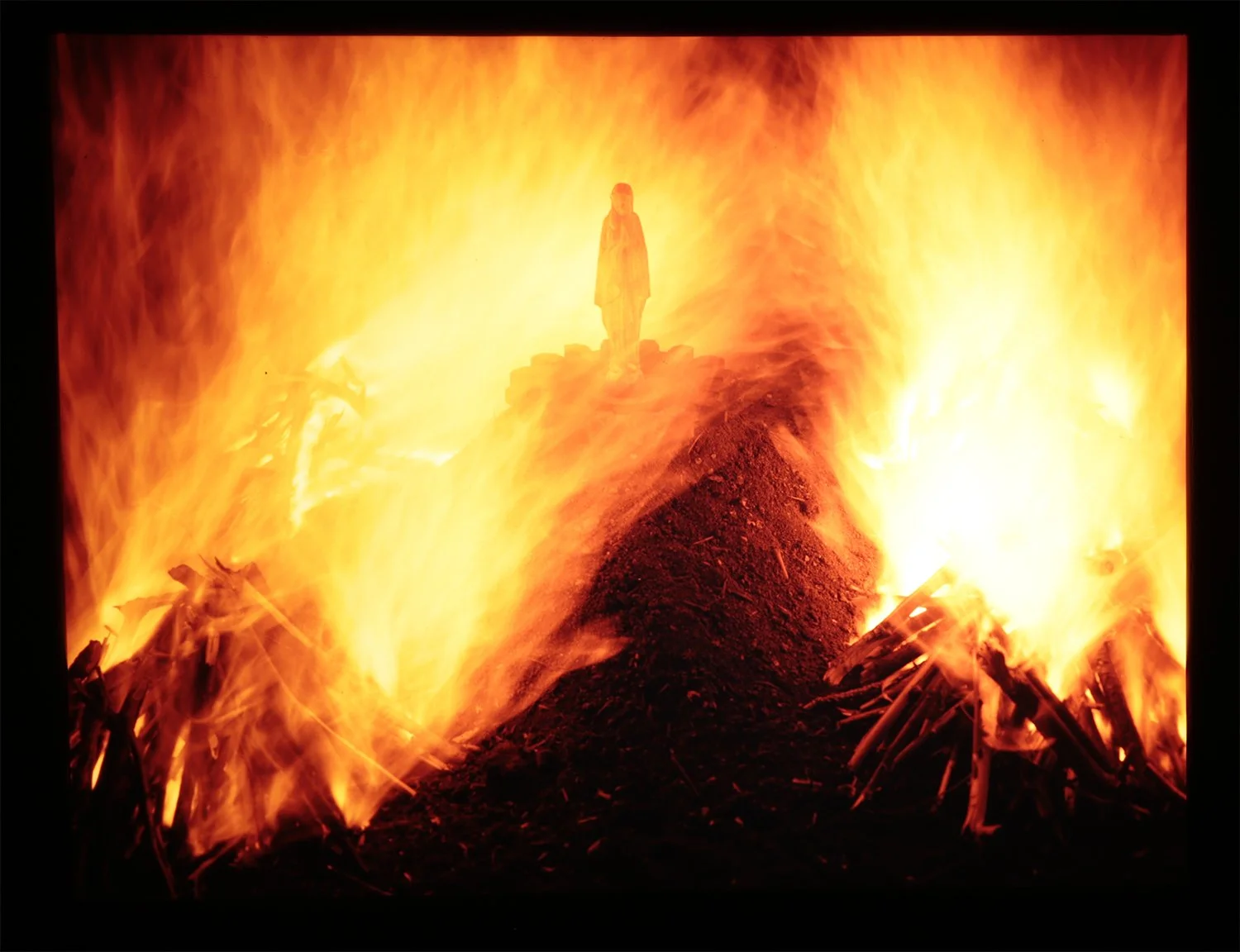
Mary In Flames
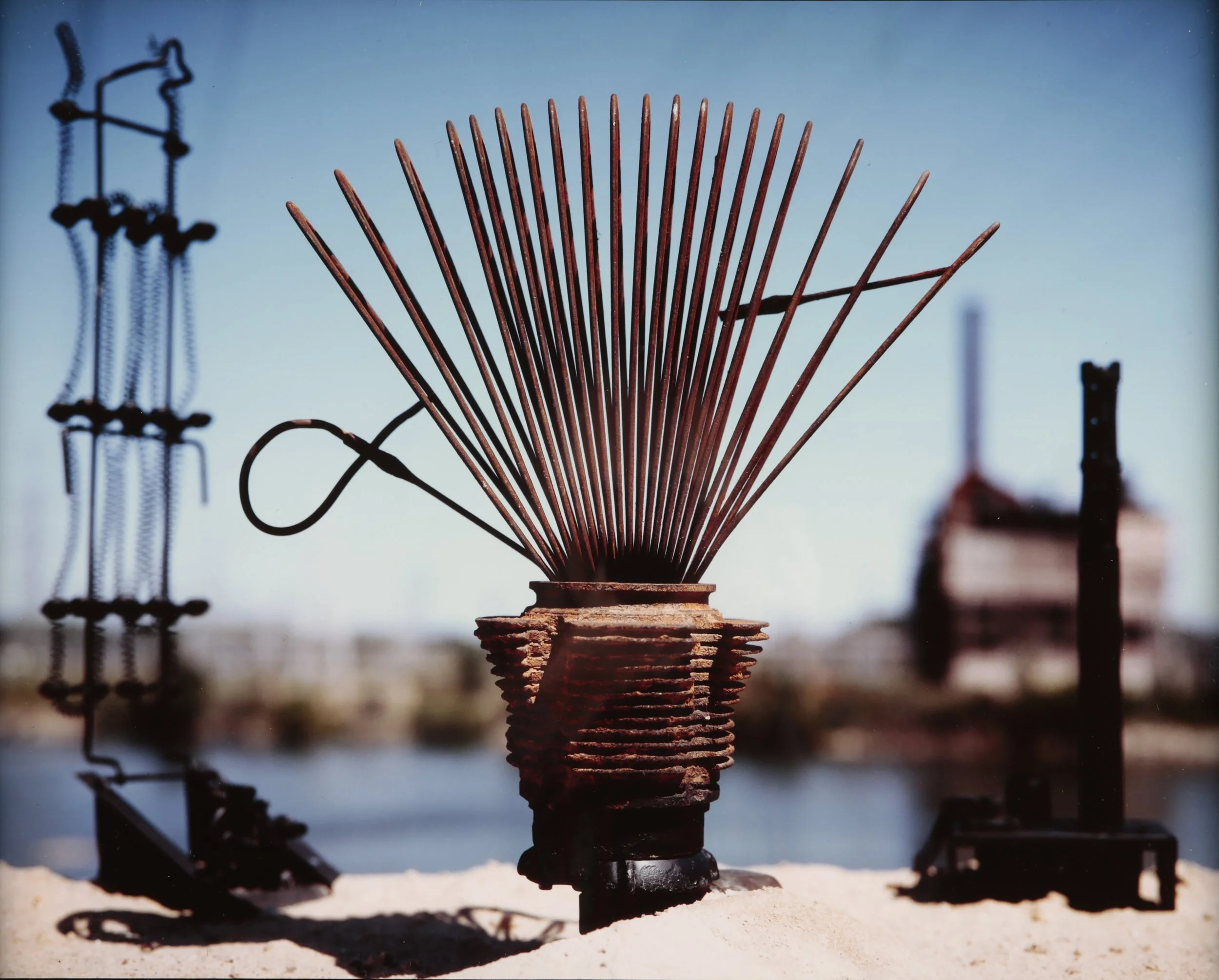
Power Plant, Brooklyn, NY
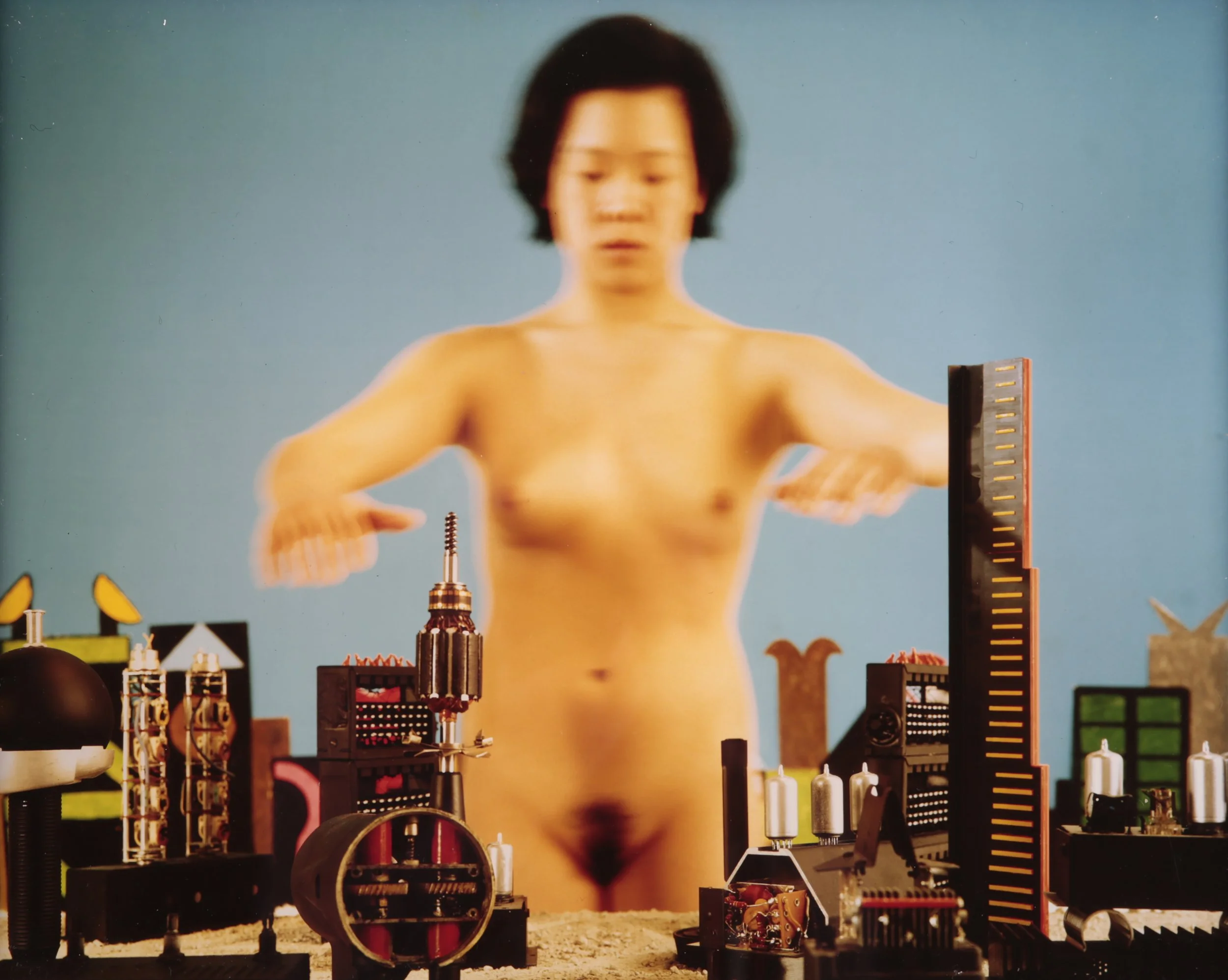
Studio Visit
In addition to the enchanting quality of Cibachrome prints, I created more than a dozen one-of-a-kind Duratrans light boxes in 1998, undergoing the same creative photographic process. First, I assembled a variety of inspirational and often quirky items, both found and fabricated objects I manipulated, reformed, and painted. Next, I set up a still-life of these items in my studio, with intentional perspective and lighting. Then, using my Sinar 4”x5” view camera I photographed the set-up with color transparency Ektachrome film. Though not always, it is safe to say I frequently found myself working with religious themes. After processing the “chromes” I either made Cibachrome enlargements or transferred the images to 8”x10” Duratrans transparency film, (the later manufactured to be mounted and lit from behind). Finally, I made boxes from wood, painted them, set the Duratrans in place backed by translucent white Plexiglas, and then installed light fixtures to illuminate from within.
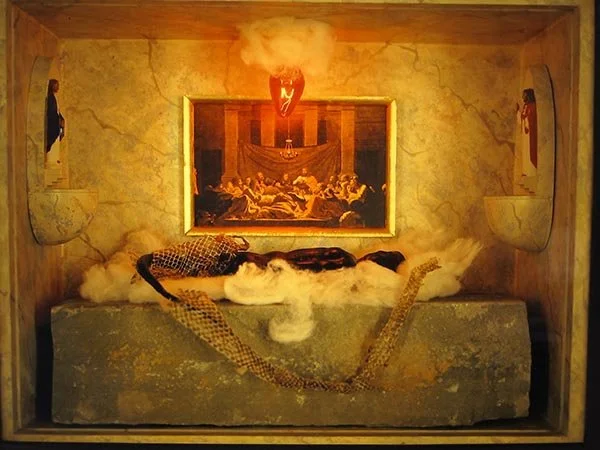
The Last Supper
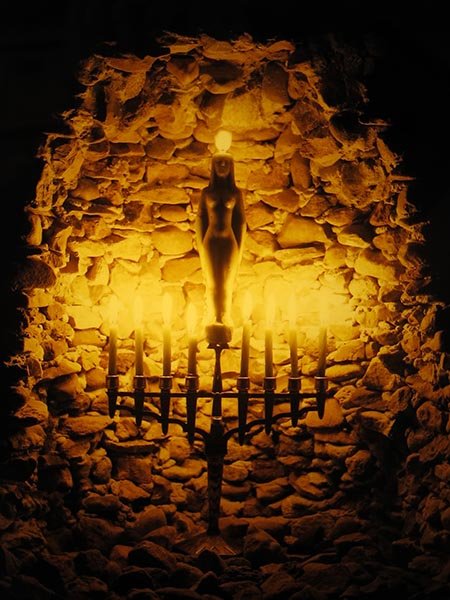
The Grotto
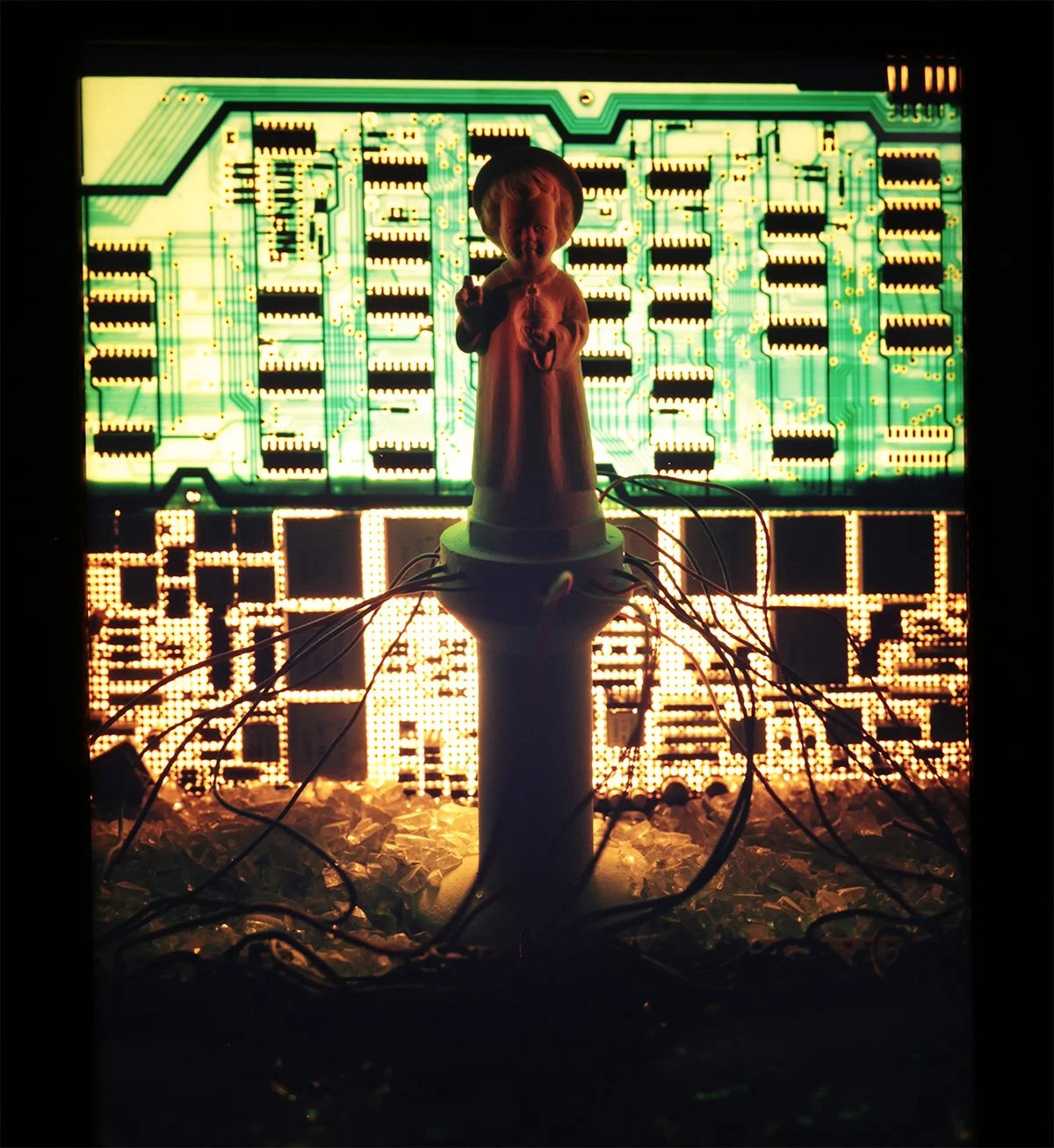
Child of Prague
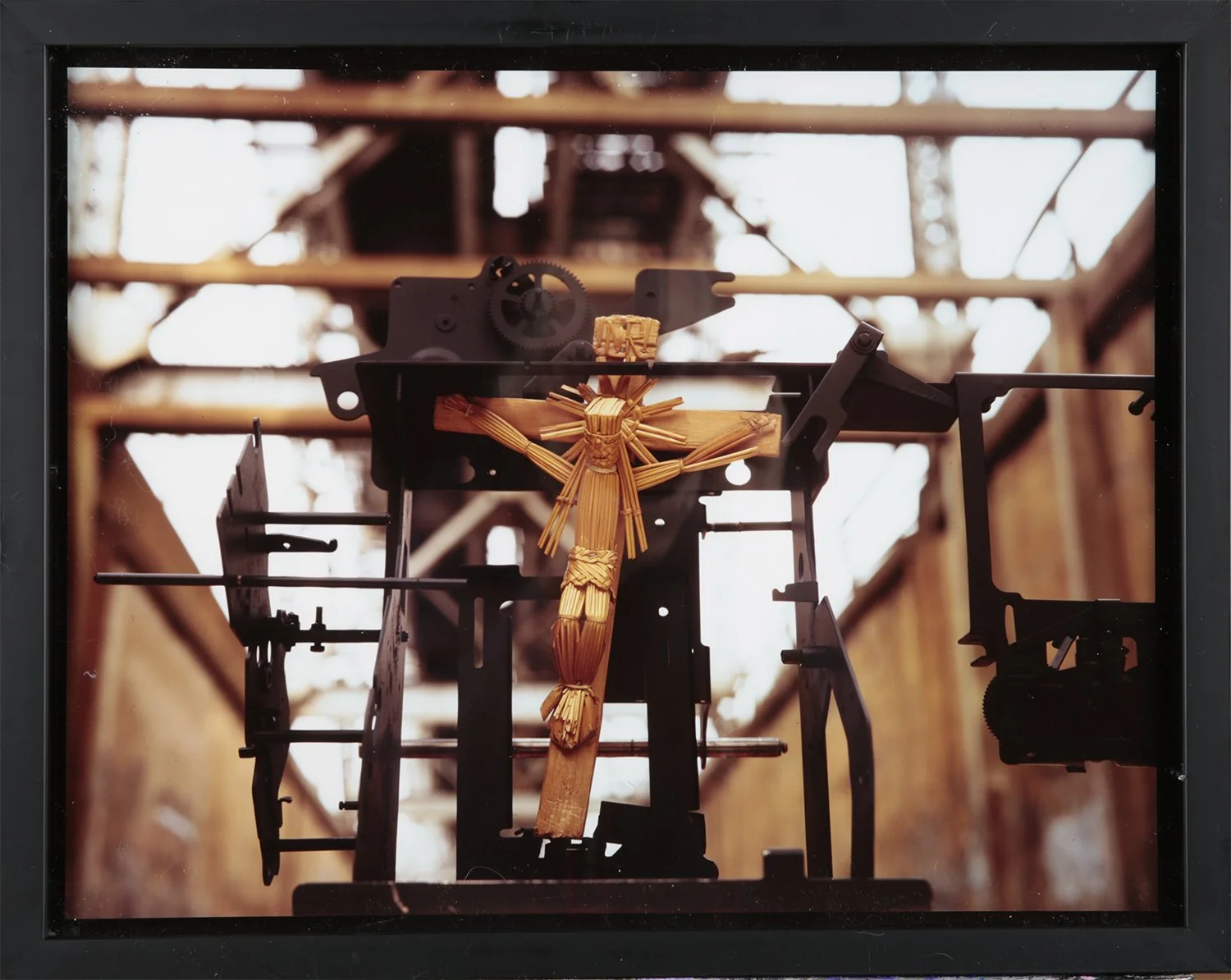
Straw Cross
Staged Photography and Narrative Scenes at MoMA
Other artists working in this stylistic genre of staged photography and narrative scenes, (albeit quite differently than me), include Barbara Kruger, Cindy Sherman, Laurie Simmons, and Jeff Wall. These and many other artists were rising stars in the early years of my creative career. In Sets, Stories, and Situations, the Museum of Modern Art describes this genre the following way.
“In its early decades, photography was considered a valuable artistic tool—especially by painters who based their compositions on photographs—but not necessarily a fine art. By the mid-19th century, photographers and artists became eager to demonstrate that the medium had serious artistic potential and that photographs could be on a par with the long-established arts of painting and sculpture. Among the ways they did this was to stage and photograph tableaux based on literature or Biblical stories, which were historically the province of painters and sculptors. Other photographers restaged well-known historic events that they were unable to capture in real time because of the technical limitations of early cameras and negatives.
“Building and reflecting upon the legacy of early staged photography, many contemporary artists make their own elaborately structured photographs—with a twist. Their images are carefully constructed and meticulously photographed, but in ways that consciously reveal their artifice. By showing the ease with which images may be set-up or manipulated, these artists challenge the commonly held perception of photography as an objective medium.”
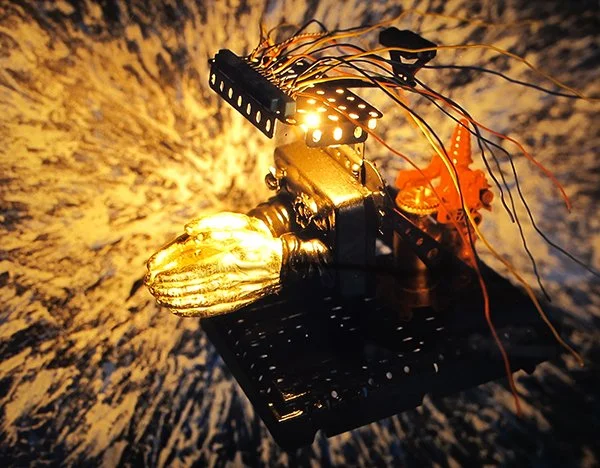
Praying Hands
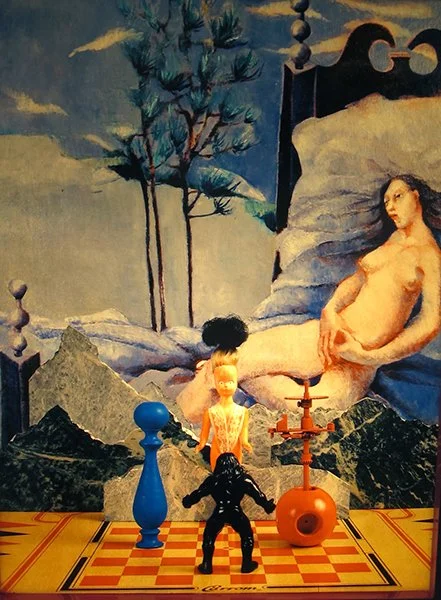
The Freud Box
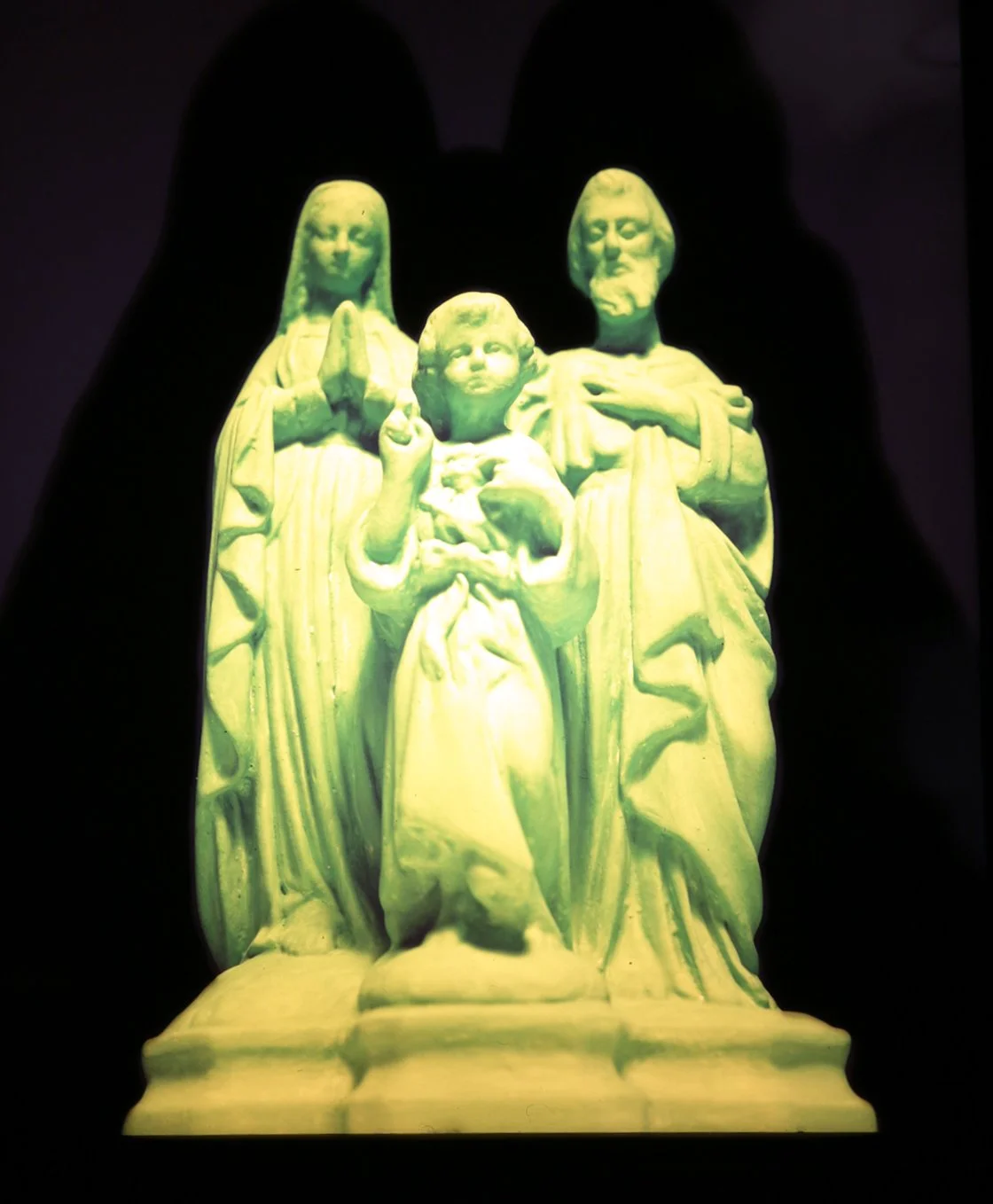
Nuclear Family